Showing posts with label Holy Spirit. Show all posts

Wednesday, 29 November 2017

Fatscript Episode 11, Joel 3, roundup and an announcement


Today we wrap up our short series on the Old Testament prophetic book of Job. A few key gleanings to take away with us:

  1. Joel was important in shaping Jewish-Christian theology, particularly with respect to the Holy Spirit's wide outpouring. How wide was perhaps the greatest task for early Christianity.
  2. As with other OT prophetic books of same genre, the day of Yahweh cannot mean a 24 hour period. Generations are concerned; major restoration and condemnation that…..
  3. Involves both natural and supernatural realms
  4. A stage of deportation seems already realised with some "Elders" left to oversee the precious land, although there is some movement through divine "timescape"
  5. Literal locust infestation seems unlikely, but remains possible.
  6. Not a full prophetic picture. Restoration where other nations are reclaimed. Link perhaps also with Peter's initial limitations.

Heiser's excellent Divine Council overview:


Download my sample chapter on the "Triune Hub" Jewish Christian religious mutation for free at https://www.academia.edu/34726445/Trinitarian_Interpretation_Mutated_Faith_and_the_Triune_Hub_Re-examining_the_Foundations_Chapter_1_


Saturday, 4 November 2017

John’s third impacting figure: Dr Dale Tuggy

Fatscript Episode 7 show notes, John’s third impacting figure: Dr Dale Tuggy


Wednesday, 4 October 2017

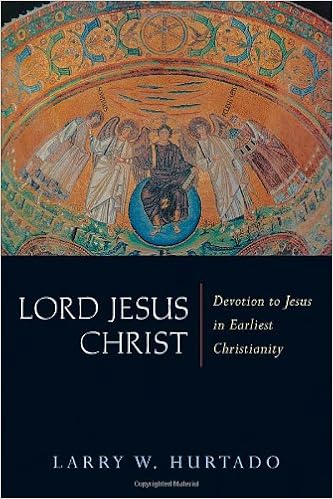
Figures who have impacted my journey: Larry Hurtado

Some notes:

- Book chapter is out! Check it out here. Almost works as a standalone paper.

- Quote from James McGrath review of Ehrman's most recent book:  Accurate memory is preserved, even in the process of distorting or reinterpreting it. And so it is frustrating when Ehrman discusses the work of famous form critics such as Bultmann and Dibelius but talks only about the fabrication of memories to meet the needs of churches in the pregospels period, to the neglect of the more interesting question of how the needs of those churches might have led to the reinterpretation of things the early Christians remembered about what Jesus said and did that were not pure fabrication (64–65). Some will suspect that Ehrman is still influenced here by his fundamentalist background, which tends to think of matters of authenticity or historicity in an all-or-nothing manner.

By the way, apologies to McGrath for probably mispronouncing his name!
- John's gospel criticism, please don't misunderstand me on the Jesus is/is not God thing!
- Dr. Hurtado's blog: https://larryhurtado.wordpress.com/
- Dr. Hurtado's interviews on Trinities hereherehere and here
- Dr. Hurtado's personal recommendation to my series on his post here
- Tetragram/tetragrammaton , relief from trinity work. First contact. Explain the project *dormant*
- My "gleanings" from my first response series (first series summary here) to Lord Jesus Christ
- Key terms: programmatic inclusion alongside. Binitarian.
- Question of centrality (see my post on Hurtado's opening words here)
- mutation proponent, and "unsuccessful mutations"
- methodology
- Jesus as LORD/Lord.... more on that next time!

Thursday, 14 September 2017

LJC S2 Part 9: Prayer - where was the Spirit?

In Part 8, we realised that a minority of passages during the canonical era included direct prayer or calling to the Lord Jesus, while reserving prime recipient to God (the Father) himself as the standard Christian pattern. I failed to note that no mention of the Holy Spirit was included in this section - an error on my part. Hurtado's focus is on the ultra-early explosion of Jesus devotion in a Jewish monotheistic context. My focus is on a first-century establishment of a triune hub mutation to the Jewish Christian faith, so the impetus is on me to spot that, research and expand as appropriate.

Since we are on Paul, we should be careful not to fall prey to an "under-realized eschatological perspective" (G. Fee, Paul, the Spirit and the People of God p. 141;), "for Paul prayer has been radically transformed by the coming of the Spirit" (idem. p. 146)" and "[t]he  beginning of Christian life is marked by the indwelling Spirit's crying out 'Abba' to God (Gal 4:6; Rom 8:15). On all occasions,' Paul urges elsewhere, 'ray in/by the Spirit'; this injunction applies to every form of prayer (Eph 6:18)." (idem. p. 146). This seems of utter importance to realise that the departed Lord Jesus has given this greatest gift that indeed permits that he and the Father might remain present with his people. Among his people. Literally, in their minds. It's literally mind-blowing! Imagine having a personal life-giving power within you that actually helps you to pray when your own words fail you?

I have to say that it is hard to write about the topic of prayer and the Holy Spirit's inclusion without becoming personally excited and involved!

Praying also gives way to praying in tongues, something else we know that Paul practised and is connected with a series of other spiritual gifts demonstrating the life of the eschatological people of God. Praying in this new way embraces the person's and the congregations' entire mind, it is transformational, it utterly embraces weakness and glorifies God and Christ in the wake of our own inability.

Definitely worth a mention, wouldn't you say?

Friday, 25 August 2017

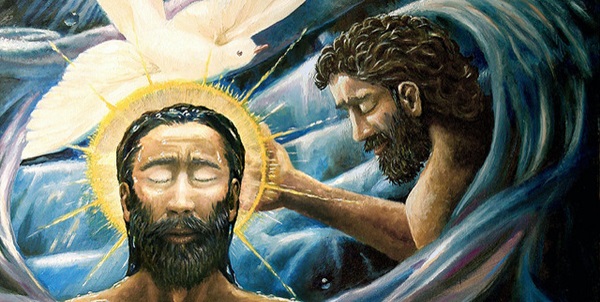
It all started with **B A P T I S M** (4): The Star Points To Another Who Points To Another

IF ANY FIRST-century historical individual could be credited with the largest pressure on the primitive Jewish Christians to adopt a form of trinitarian thinking, it would be the wilderness apocalyptic preacher known as "John the Baptist". It sounds kind of whacky, but it's true! Let's take a moment to recap our Journey thus far, in this the last of four instalments into John the Baptist, and why I reach this conclusion.


In Part 1, I just wanted to get straight to the point and offered 9 bullets that reconstruct how John's ministry was necessarily contrasted with Jesus' baptism with the Holy Spirit, and concluded: This trinitarian saying [trinitarian baptismal formula] was said over converts by Jewish Christians in the latter half of the first century as a part of their baptism rites, and the confusion was at last resolved. This mutation of Judaism had astarted to vocalise, ritualise and (although they did not know it) immortalise its "Triune Hub".

In Part 2, I wanted to demonstrate how significant John the Baptist was from a non-Christian source, the Jewish historian Josephus. Here John receives as much attention from Josephus as Jesus. He is understood to have had massive influence such that even that God himself would overturn Herod's army in vengeance against the execution of his beloved prophet, John.

In Part 3, I took on the problem of the date of John's death, which is problematic if you cross the gospels' chronology with that of Josephus, but also a good angle from which to look at how the portrayal may have developed over the later stages of the first century. Here I present, gospel author by gospel author, the portrayal of John the Baptist, noting first in Mark the basic events and assumed death of John and Luke's expanded version which includes John's own birth narrative alongside Jesus'. Then we saw that Matthew almost seems to take on the challenge against the Josephus chronology, integrating narrative that explicitly informs Jesus of John's tragic demise. Finally, we saw in John's gospel that the author simply allows Jesus to "steal the show", allowing John to slip from view once he has served his purpose to point to the light.

What I failed to note in looking at Matthew (and regular readers will know I have a special relationship with Matthew!), is the relevance of the date of Antiquities, where Josephus describes John's ministry and death. It was written no later than 94 AD, but possibly earlier. Given all the other late indicators I am seeing for Matthew, I would suggest that this over-emphasis on Jesus' interaction with John's death is a firm contribution to a composition date of Matthew around the 90s close to John. It obviously contributes to the strong consensus that composition by the disciple Matthew is very unlikely.

Another thing we didn't do was look at the passages in Acts that refer to him. We'll not lose too much time on them individually now, as there are actually 9 of them, but they really do consistently echo what we have been saying all along: the contrast between the two main first-century Jewish figures, and that John points to Jesus. For that to mean something big so much decades later, can only mean that John's ministry continued to make a huge splash in Judea and beyond for decades.

Thus, regardless of when John really died, John's memory is dedicated to being that of a star player that nonetheless pointed to the hero and saviour of all, Jesus Christ, the inaugurator of the new Eschatological Age of the Spirit! It is with these ideas in mind that I called this last part: The Star Points To Another Who Points To Another.

Thank you for following the journey, blessings.

For reference, those 9 bullets again, followed by all New Testament references to John.
  • John's impact was really very big indeed and his renown mid-first-century may have been comparable with Jesus', see for example Apollos' of Alexandria's familiarity with his ministry in Acts chapter 18 and Paul's encounter with 12 disciples in Ephesus in the following chapter.
  • A clear historical relationship connects these major first-century Jewish players of John and Jesus; some credible scholars, have Jesus first being John's disciple before starting his own movement.
  • We have no texts of any followers of John.
  • For Jesus followers, Jesus has to be bigger and better than John. If John was great, and Jesus much greater than him. This could only have contributed to his final exalted status.
  • Contrary to popular Christian apologetics, killing a leader does not necessarily kill off the sect he started unless he is resurrected. John is solid proof of that. 
  • John and Jesus are firmly differentiated on the following grounds:
    • the Christ was more successfully understood to have really been raised back to life, unlike the rumours that surrounded a resurrection for John, 
    • John's humility seems genuine and may indeed have heralded the coming Messiah, turning down offers of honour, recognition and prestige (which ironically had the opposite effect), while Jesus combined humility and the messiahship,
    • Jesus baptised with the Holy Spirit; John baptised with water.
  • Since both martyrs were hugely influential baptisers and their ministries overlapped, their baptisms (and order of death) were at times confused.
  • Someone, somewhere, decided: enough is enough and came up with the threefold baptismal formula to clear it up once and for all. This may have been the author of Matthew's gospel, (whom I strongly believe wrote later than Luke and Acts, which bear witness to the confusion), or it may have been the author of the part of the Didache that also contains the baptism formula. Since both those sources are Jewish, that someone was almost certainly a strongly Jewish Christian (leader). 
  • Conclusion: This trinitarian saying was said over converts by Jewish Christians in the latter half of the first century as a part of their baptism rites, and the confusion was at last resolved. This mutation of Judaism had started to vocalise, ritualise and (although they did not know it) immortalise its "Triune Hub".

New Testament References


Sunday, 1 May 2016

Do God and Christ love the Holy Spirit?

Perhaps the greatest issue for Social Trinitarians with respect to the Holy Spirit is "his" personhood. Generally, in defence of this personhood, they point to passages that do indeed seem to imply a certain someone, capable of emotion and saying things, for example. These occasional references to which these Trinitarians point are - initially - suggestive of personhood, for sure. To my mind, however, there are two significant "buts", and I think Pastor Finnegan touches on the first:
1. The rarity of the suggestive occurrences relative to the more impersonal and dissuasive ones.
2. The absence of love evidenced between the Father or Son and the (or their) Spirit.
It is on this second point that I have not yet found significant concern within the Trinitarian literature - but perhaps with good reason. Social Trinitarians in particular should have an issue here. They claim that these three literal persons are bound together in a profound and infinite love that permits a oneness appropriate to singular pronouns. But there is a problem here, well and truly shoved under the carpet – where is the love of the Father or of the Son for his (or their) Spirit in the Bible?

Since the initial discussion generated by this post on the trinities facebook page, it has been argued defensively, and perhaps predictably, that the Spirit must be a distinct person because of the personal language with which this Spirit is sometimes associated. There are assumptions underlying this sort of approach that I think can be outlined as follows:
·        The opposing team (me) believes that the Holy Spirit is an impersonal force (or just an impersonal force)
·        Personal language of the Holy Spirit obliterates such crazy ideas.
I remain open. I honestly don't mind if the Holy Spirit has full personhood in the same sense as the Father and the Son. I think that would be pretty cool and I find the social Trinitarian rhetoric both captivating and inspiring. If, however, there is a reason why there is no Biblical evidence for HS personhood in the inter-divine-persons relations, then the empowering presence of the highly personal God (and Son) at work in people's lives could still be personal. For me, that would remain inspiring and captivating.

Thus for Social Trinitarians, this should amount to a serious problem. They claim that Trinity is a most beautiful and delicate "dance" of humble love and collaboration. But it is not enough to point to a few potential occurrences of Holy Spirit personhood to justify the love dance. In order to fill a seemingly gaping hole in Social Trinitarian theology, solid evidence needs to be provided for love of the Father and Son for the Spirit. Where is that evidence?

Saturday, 2 April 2016

The Lord is the Spirit.... WHAT? New thoughts on 2 Corinthians 3:16-18 [updated August 2018]

I usually try to avoid too much theologising over the Holy Spirit, not because I don't love the Spirit but because I simply don't feel a drive to study the subject, in the same way I don't feel drawn to theories of atonement or theodicy (at least one post can be consulted here, however). That said, I have at various points thought with regard to 2 Corinthians 3:16-18: "huh, that's weird". Isn't the Spirit supposed to be distinct from Jesus, doesn't he go but send another? From a Triune-God advocate's perspective, you also might want to say that both Jesus and Spirit are God or fully-divine or essentially and perfectly united, or something, but that this unity still creates no confusion between their persons. So it's something of a head-scratcher. Here is the text from the NIV to refresh our memories:

But whenever anyone turns to the Lord, the veil is taken away. Now the Lord is the Spirit, and where the Spirit of the Lord is, there is freedom. And we all, who with unveiled faces contemplate the Lord’s glory, are being transformed into his image with ever-increasing glory, which comes from the Lord, who is the Spirit.

Seems like a problem, doesn't it? I have a new thought on this passage following a little bit of research I'd like to share with you, and if possible, please feel free to share your perspective. What is fascinating about this problem is that it should represent a difficulty for any Christological perspective, so you never know, this may be read with less scepticism. 

Tiny details can have huge ramifications, right? Here's a whopper: I recently learned and shared an article from early Christianity specialist, Larry Hurtado, in which he also cited other scholars who noted that especially in the Pentateuch (the first five books of the Old Testament) but also through the Old Testament, there is a literary clue in the Greek translation of Yahweh. Probably most people reading this blog already know that in the LXX, the Greek translation of the Old Testament scriptures, Yahweh is substituted by KYRIOS. Kyrios is a flexible word that means Lord, master or simply "sir". It is most certainly this  LXX version of the OT that the NT church used since the quotations cited in the NT texts align so closely to it. It is hard for me to realise why the point of this research is so unknown and even among some scholars. But here it is: KYRIOS is ANARTHROUS when in place of Yahweh. Eh? Anarthrous means the word does not have an article attached. In the case of Yahweh, the personal name of Israel's god, a clue to this origin was left by leaving out the article. 

So why do we translate Yahweh with "THE LORD", and not just "LORD" or some other name/title that has no article preceding it? That is a very interesting question to which I cannot yet give you a satisfying answer. One reason might have been that translators wanted to draw out links between Yahweh and Jesus Christ, who is undeniably assigned the title of the ultimate Lord. Some Greek specialists might like to quibble: sometimes the article is dropped anyway, it is difficult to predict article behaviour. On issues more associated with Theos,  this would be Daniel Wallace's perspective, who spent a lot of time wrestling with the issue. We also know from other places like John 4:24 (God [the Father] is spirit), which leads me to roughly submit the following alternative translation:

[Note this translation was updated in August 2018 based on the completed survey of Septuagint translations of Yahweh to Kyrios, the subsequent series on overhauling the biblical reliance on antiquated lordship language and the suggestion of reinforcing Eugene Peterson's translation of "GOD"]

16 But whenever anyone turns to GOD, the veil is taken away. 17 Now GOD is the Spirit, and where GOD's Spirit is, there is freedom. 18 And we all, who with unveiled faces contemplate GOD's glory, are being transformed into his image with ever-increasing glory, which comes from GOD's Spirit.

Nowhere in the Greek in this text is Kyrios prefixed with the article, except at the start of verse 17. We can note especially that in verse 16 (turns to GOD), it is particularly curious that there is no article. Acts 16:18 has the same verb for turning but states "turned to the spirit". Acts 9:40, 2 Peter 2:22 also supply the article.

Finally, perhaps the most striking examples are John 13:3 and 1 Thessalonians 1:9. These two passages are two of only seven in the New Testament where God (theos) is
- mentioned twice
- is anarthrous in the first instance AND arthrous in the second.

In both John 13:3 and 1 Thessalonians 1:9 God (of all people) is articulated when prefixed by "to" (pro), literally: AND TO THE GOD HE WAS GOING (John 13:3) and YOU TURNED TO THE GOD (1 Thessalonians 1:9). 1 Thessalonians even has the same verb as 2 Corinthians 3:16. 

So the question remains, why would a New Testament author curiously drop an article before Kyrios? This proposal provides the following hypothesis: Paul was totally familiar with the LXX practice of article dropping for KYRIOS when it replaced Yahweh, and did so here, totally in line with the Old Testament context in which the passage is utterly soaked (tablets of stone, Israelites, Moses, the veil...).

Thanks for reading, and if interested see articles and the definite article. I also have an unfinished series in there on the word ARCHE that you can search for in the blog search field above.

Tuesday, 2 February 2016

Unitarians on the Holy Spirit

I am still pondering how to take forward my antimodalist convictions. It is difficult because I do not yet have collaborators and there is not much written material on modalism influences in the modern church. It occurred to me as I walked and prayed and worshipped and reflected this morning that to take it forward I must ask for God's providential help in other's ideas and skills. Another important consideration is the Holy Spirit.


Stephen Holmes is probably the Trinitarian I appreciate and trust within the reflective Trinitarian theological community, as anyone who follows this blog probably realises (posts influenced by issues he raises can be seen here). In my paper Trinitarian Interpretations, I lean on his research and insights quite heavily. His core claim is that God is Trinitarian, but not tripersonal in the modern sense of the word "person". For Holmes, there is one divine personality, one mind, one will, one creator, yet three hypostases which are "God three times over", language he borrows I think from another "one-self" Trinitarian, Brian Leftow. These one-self Trinitarians are not modalists, but they are also not too developed on the distinctives between the hypostases of Father, Son and Spirit. The point is rather this: Holmes claims a radical re-working of Trinitarian doctrine in the last 100-150 years, culminating in "social Trinitarianism", combining three highly distinct persons into one God. There is a historical Trinitarianism from which modern social trinitarianism radically departs.

I wondered this morning if a similar kind of radical redefinition could be levelled at the Unitarians. Unitarians believe that God is one single being, comprising one person, the Father, to whom we have access uniquely through his perfect, glorious, and universe-entrusted Son, Jesus, and whose authority and presence is shared to his people through the sending by this Son, from the Father, of this Holy Spirit, as foretold long ago. OK maybe not all Unitarians express it like that, but I suspect and hope many of the Biblical Unitarian branch might have something like that in mind. So how might Unitarians have radically differed in more recent centuries to their predecessors?

Take the Arians or the homoisians (or homoians), for example. It is quite difficult to know exactly what they thought and taught as they were the "losers" of the great theological controversies of the fourth century. Indeed, we only have a version from the victors who, with Irenaeus perhaps setting the early precedent in 3rd century, were bent not only on showing how insane their position was, but also often to highlight their moral failings, corrupted minds, and so on, in order to discredit their opponents. However, in reading some of their polemical writings, we do learn of a fascinating difference, I think, with modern-day Unitarianism: the way in which they spoke of the Holy Spirit was interpreted by their anti-homoian opponents as that of a creature. The Holy Spirit is a creature? By this, clearly no-one understood a biological organism, but one that was created by God the Father, from whom all things derrive.

Today no-one believes that the Holy Spirit is a creature! Trinitarians understand this one as the third member of a Triune God, co-equal, co-glorified, consubstantial and co-eternal with the Father and the Son, intrinsically involved with all divine operations and action. Unitarians believe that this one is not really a person at all and point to the [ontologically] impersonal language most of the Bible speaks of the Holy Spirit and the subtle pushes of the translators toward a more personal depiction (e.g. all of the "who" you see in reference to the Bible could just as correctly, from a linguistic point of view, be translated "which" - did you know that?) They would (or should) rally around another theologically-developed idea of the Spirit being "God's empowering presence" (see Gordon Fee's classic work entitled precisely this way).