
I OFTEN FEEL prompted to write something following an Unbelievable? podcast - this week is no exception, on a topic that I feel leaves my Christian camp still wanting: creation. This week's title is Debating ID – Can evolution explain the bacterial flagellum? Jonathan McLatchie vs Keith Fox. Sounds kinda irrelevant, right? The title is unhelpful, and even these two Christian debators admit that this bacterial flagellum is almost besides the point: there are a near infinite incredible and frankly awe-inspiring (maybe more awe-inspiring than bacterial flagellum) aspects of nature that illustrate their differences of opinion. The question is, what do we do with aspects of nature that science cannot yet adequately account for?
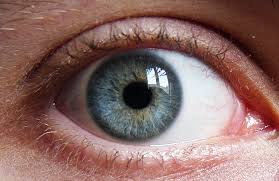 Back in the 1990s, an important book came out by Michael Behe entitled "Darwin's Black Box". I say "important" because for Christian apologetics, Behe's book would put a qualified biochemist's name behind an intelligently-sounding principle of "irreducible complexity" that would substantiate religious claims to a scientific proof for God's (or a god's) direct involvement in the creation of the universe, because some aspects of nature are too complex to be accounted for by today's scientific models. At the time, the human eye was among his examples, which is obviously insanely complex and difficult to explain as a result of gradual mutations over millions of years. Unfortunately, as this debate seemed to concede, that one is no longer on the ID (Intelligent Design) super list, because twenty years of science has led us to better understand the development of the eye (I recently learned for example that the octopus' eye, for instance, has no "blind spot" - there is no nerve bundle-gathering within the octopus eye itself). But the flagellum still is just too whacky to explain, so maybe that is what gave rise to the sampled title. The fact alone that the list is not stable should make Christians super-wary about this kind of argumentation pushed out there by Christian apologists like Jonathan McLatchie. Here's another - google Michael Behe's name, and you should get a top hit of his wikipedia entry, entitled: Michael J. Behe is an American biochemist, author, and advocate of the pseudoscientific principle of intelligent design. Note that word carefully: "pseudoscientific".
I will soon be reviewing Creation or Evolution: Do We Have to Choose? by Dennis Alexander (Alexander was actually hosted on the Unbelievable show shortly after his book came out back in 2010 and more recently interacted with anti-evolutionist Wayne Rossiter in 2017 here), who points out that despite the apparent sophistication of Behe's work and term "irreducible complexity", there have been no biochemist peer-reviewed journal articles even discussing this principle. The scientific community simply does not recognise Intelligent Design under this label.
 So what are apologists like Behe and McLatchie arguing for here? Exactly what many closed Christian schools continue to teach: that science fails to explain the impossibly complex and balanced universe, that evolution is basically false, and they can prove it. How? Because of "irreducible complexity". Behe's approach was relegated (or perhaps promoted) to "pseudoscience" when a court in the States actually had to come to a ruling on the issue and if irreducible complexity had a religious or scientific foundation in Kitzmiller v. Dover Area School District.
Thus far, it seems that irreducible complexity has an unstable foundation and has yet to be recognised by any major peer-reviewed scientific journals. But it gets worse. Christian (or any religious person, but Christians seem to be the most vocal) anti-evolutionists who want to say that because God made us special, the "random" process of evolution cannot be the mechanism of God to bring about humankind, fail to see a major theological flaw in their reasoning. Christian evolutionists want to reconcile God's entire and ongoing creative act with scientific discovery. If you feel a religious urge to deny evolution then you are actually pushing for a biblically-unfounded splitting of God's creative act. Put crudely: God creates in some kind of naturally-observable or predictable way. Then he intervenes miraculously by creating humans. In other words, God intervenes into his own nature to do something that "left to its own course" would never have produced us, or indeed anything spectacular or unexplainable natural phenomenon. Do you see the picture? God is reduced to tweaking, as Keith Fox correctly points out. There's like a barren lifelessness to God's own work unless God intervenes miraculously, again and again and again.
There is a fourth problem: peculiar arrogance. This is actually connected to the unstable foundation of irreducible complexity I mentioned above. Why on earth should we assume that our advanced scientific knowledge of the universe has reached its zenith? Non-individualised knowledge will never reach such a stage, because we are learning more and more all the time, and expanding the knowledge package for each generation to come. Irreducible complexity basically is saying that TODAY something appears irreducibly complex. And that reliance is actually quite bizarre. It is based on the science of today, thus despite dismissive gesturing against science still coming in through the back door. It even trust's today's science more than today's science does, and does a quick mishmash with biblical texts to make sure that my assertions are shielded from view.
More serious biochemists like Alexander, Fox and many others are finding an increasing plausibility among lay thinkers like myself, and an excellent resource is available at biologos, where evolution is accepted as God's mechanism. So why the debate if evolutionary creation dodges the frankly dodgy problems of irreducible complexity? Despite their blindspots, the better apologists against evolution point out a problem of God's true involvement. If God is not involved in specially and directly in the ways they are proposing, then where is God at all in the process? Genetic mutation happens by chance. Biologos and proponents of such an approach like me have to face this, and we are still not doing a very good job at it in my opinion.
When left just to marvel and say, well God's ways are not ours, and to peer into how God intervenes so widely and cosmically is way beyond and outside what science can say, then you can quickly here the atheist tapping on his microphone to check it is working correctly. What difference does God make? This seems like a superficial and unnecessary faith stance, a leftover from an era of human development that did require religious causality, and is now being rehashed to fit around a scientific enterprise that bizarrely cannot factor Him at all. I'm uncomfortable with this.
Maybe I'm just uncomfortable with the fact that faith really does have personal choice and responsibility forever stamped into its DNA (sorry for some poor allusions there!).
But Success is not random. The mutations that succeed are not random. They occur in harmony within a given environment. It is the whole biosphere that emerges with success and harmony at its core, although forever at war within itself wherever internal successes come with defeats, like a cancer "succeeding" over a failed organism's defense mechanisms. But as a highly-complex, inter-related and dependent ecosystem, our planet has thus far succeeded in ways we see nowhere else *yet*.
Evolutionary creation correctly disconnects Adam's great Sin with general suffering and death, recognising that not only do these processes precede the development of humans (and other marvels), they even form the basis of apparently evil processes. Success comes at a cost. The Intelligent Design campers (back to that label in a sec) are left, ridiculously in my view, to imply that The Fall had retrospective consequences, like it works backwards in time or something. The only creationists exempt from such a problem are seven-day creationists, whose prominence in the church seems to be dwindling (these guys hold to a literal seven day creation even about six to ten thousand years ago). But they don't solve the problem of theodicy for us - and neither will I!
Evolution happened. We happened. Natural sufferings and evils are firmly dislocated from our own evil free choices, but why do people like me still seem to require non-human agency? Look at how I stated the problem in the plural.
I said: sufferings and evils, in the plural. Suffering and death are awful and horrendous experientially. I happen to have experienced more suffering recently than at other periods in my life. Although to varying degrees, we all do. The only way through as I can see it is that to be there at all, God must be the God of Cosmic Success and Harmony. He cannot be defined by any one situation, be it a glorious birth or a catalysmic catastrophe, but the overall adaptative life within in it all. That stream is founded on successful harmony.
Closing thought on Intelligent Design: I am unhappy that this title has been taken by such wrong-headed thinking. Evolutionary creation does not reject God as creator but has to steer clear of the word "design" because of what the Behe-s have done to it on the one hand, and the unnecessary specifics of it on the other (eg the statement "God designed us to have four fingers and a thumb on each hand"). However and in actual fact, the scientific community is not against all notions of design - it will resolutely avoid, however, adding the necessity of or reliance on a sentient independent intelligence, aka God, the Intelligent Designer.
I will soon be reviewing Creation or Evolution: Do We Have to Choose? by Dennis Alexander (Alexander was actually hosted on the Unbelievable show shortly after his book came out back in 2010 and more recently interacted with anti-evolutionist Wayne Rossiter in 2017 here), who points out that despite the apparent sophistication of Behe's work and term "irreducible complexity", there have been no biochemist peer-reviewed journal articles even discussing this principle. The scientific community simply does not recognise Intelligent Design under this label.
So what are apologists like Behe and McLatchie arguing for here? Exactly what many closed Christian schools continue to teach: that science fails to explain the impossibly complex and balanced universe, that evolution is basically false, and they can prove it. How? Because of "irreducible complexity". Behe's approach was relegated (or perhaps promoted) to "pseudoscience" when a court in the States actually had to come to a ruling on the issue and if irreducible complexity had a religious or scientific foundation in Kitzmiller v. Dover Area School District. Thus far, it seems that irreducible complexity has an unstable foundation and has yet to be recognised by any major peer-reviewed scientific journals. But it gets worse. Christian (or any religious person, but Christians seem to be the most vocal) anti-evolutionists who want to say that because God made us special, the "random" process of evolution cannot be the mechanism of God to bring about humankind, fail to see a major theological flaw in their reasoning. Christian evolutionists want to reconcile God's entire and ongoing creative act with scientific discovery. If you feel a religious urge to deny evolution then you are actually pushing for a biblically-unfounded splitting of God's creative act. Put crudely: God creates in some kind of naturally-observable or predictable way. Then he intervenes miraculously by creating humans. In other words, God intervenes into his own nature to do something that "left to its own course" would never have produced us, or indeed anything spectacular or unexplainable natural phenomenon. Do you see the picture? God is reduced to tweaking, as Keith Fox correctly points out. There's like a barren lifelessness to God's own work unless God intervenes miraculously, again and again and again.
There is a fourth problem: peculiar arrogance. This is actually connected to the unstable foundation of irreducible complexity I mentioned above. Why on earth should we assume that our advanced scientific knowledge of the universe has reached its zenith? Non-individualised knowledge will never reach such a stage, because we are learning more and more all the time, and expanding the knowledge package for each generation to come. Irreducible complexity basically is saying that TODAY something appears irreducibly complex. And that reliance is actually quite bizarre. It is based on the science of today, thus despite dismissive gesturing against science still coming in through the back door. It even trust's today's science more than today's science does, and does a quick mishmash with biblical texts to make sure that my assertions are shielded from view.
More serious biochemists like Alexander, Fox and many others are finding an increasing plausibility among lay thinkers like myself, and an excellent resource is available at biologos, where evolution is accepted as God's mechanism. So why the debate if evolutionary creation dodges the frankly dodgy problems of irreducible complexity? Despite their blindspots, the better apologists against evolution point out a problem of God's true involvement. If God is not involved in specially and directly in the ways they are proposing, then where is God at all in the process? Genetic mutation happens by chance. Biologos and proponents of such an approach like me have to face this, and we are still not doing a very good job at it in my opinion.
When left just to marvel and say, well God's ways are not ours, and to peer into how God intervenes so widely and cosmically is way beyond and outside what science can say, then you can quickly here the atheist tapping on his microphone to check it is working correctly. What difference does God make? This seems like a superficial and unnecessary faith stance, a leftover from an era of human development that did require religious causality, and is now being rehashed to fit around a scientific enterprise that bizarrely cannot factor Him at all. I'm uncomfortable with this.
Maybe I'm just uncomfortable with the fact that faith really does have personal choice and responsibility forever stamped into its DNA (sorry for some poor allusions there!).
But Success is not random. The mutations that succeed are not random. They occur in harmony within a given environment. It is the whole biosphere that emerges with success and harmony at its core, although forever at war within itself wherever internal successes come with defeats, like a cancer "succeeding" over a failed organism's defense mechanisms. But as a highly-complex, inter-related and dependent ecosystem, our planet has thus far succeeded in ways we see nowhere else *yet*.
Evolutionary creation correctly disconnects Adam's great Sin with general suffering and death, recognising that not only do these processes precede the development of humans (and other marvels), they even form the basis of apparently evil processes. Success comes at a cost. The Intelligent Design campers (back to that label in a sec) are left, ridiculously in my view, to imply that The Fall had retrospective consequences, like it works backwards in time or something. The only creationists exempt from such a problem are seven-day creationists, whose prominence in the church seems to be dwindling (these guys hold to a literal seven day creation even about six to ten thousand years ago). But they don't solve the problem of theodicy for us - and neither will I!
Evolution happened. We happened. Natural sufferings and evils are firmly dislocated from our own evil free choices, but why do people like me still seem to require non-human agency? Look at how I stated the problem in the plural.
I said: sufferings and evils, in the plural. Suffering and death are awful and horrendous experientially. I happen to have experienced more suffering recently than at other periods in my life. Although to varying degrees, we all do. The only way through as I can see it is that to be there at all, God must be the God of Cosmic Success and Harmony. He cannot be defined by any one situation, be it a glorious birth or a catalysmic catastrophe, but the overall adaptative life within in it all. That stream is founded on successful harmony.
Closing thought on Intelligent Design: I am unhappy that this title has been taken by such wrong-headed thinking. Evolutionary creation does not reject God as creator but has to steer clear of the word "design" because of what the Behe-s have done to it on the one hand, and the unnecessary specifics of it on the other (eg the statement "God designed us to have four fingers and a thumb on each hand"). However and in actual fact, the scientific community is not against all notions of design - it will resolutely avoid, however, adding the necessity of or reliance on a sentient independent intelligence, aka God, the Intelligent Designer.

