
WHEREVER YOU ARE and whoever you are, you probably know the experience of being on the outside of a group you'd like to be in, or being comfortable in a group, perhaps with a certain role to play and being glad of it. Perhaps the group is quite informal or abides to strict rules. Perhaps there is a leader present to give guidance and instruction, even discipline, like the teacher in the class.
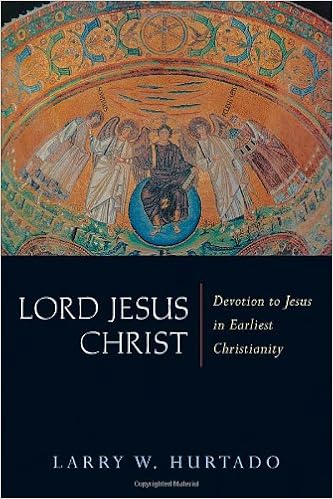
Group dynamics are a part of our way of life and have affected every human life on the planet since the dawn of our species. Today's post, number 6 in our second sequence on Larry Hurtado's 2003 book Lord Jesus Christ, is concerned precisely with religious group dynamics about who's in and who's out.
In this second chapter focussed on Paul, Hurtado reminds us that we are not examining a specific man's theology, but rather the kind of church communities that were supported by him (and vice versa), as he expands a chapter section he calls "Jesus' Redemptive Death and Resurrection".
Most folks know that one of the most defining aspects of the Christian message is that "Christ died for our sins", which is certainly not something that Paul came up with:
Everyone he is writing to obviously already believes in Jesus' redemptive death, resurrection and exaltation, and it gets "tucked away" into a good number of his exhortations or instructions etc., sometimes on quite different topics and often without expansion. Two major exceptions exist, however, but before we get to those, I need to share an insight about the "who's in in and who's out" revolution in the New Testament.
As I took a break from writing this post (the shower is always a great place for new insights I find!) I was struck with a deep urge to study Acts 11 afresh. As I did this I noticed two things.
Firstly, as I have taken for granted like most Christians do, I was reminded of the nonetheless profound discovery of Peter - gentiles are "in". Not only is their food "OK", but the true purifier and enabler, the Holy Spirit is just as freely given to the Gentile believers as the Jewish believers who rejoice (v. 18). It is very hard to describe quite how powerful a paradigm-shift that would have been, and indeed it seems to have needed this profound spiritual encounter in Acts 11 and direct command from the Lord (I presume Jesus) for Peter to grasp it.
But there is a second thing that I noticed. Imagine you are Peter and your heart has been broken about these outsiders, you now see them as your brothers and sisters and a sort of ancient, deep-rooted "racism" has just powerfully fallen from your eyes and dissolved into joy. We have nothing over them, we are all equally indebted to our Lord and Saviour Jesus Christ, equally empowered by God through the precious sending of his Holy Spirit. WE ARE EQUALS. This still leaves the following possibility open: So, of course, they can get circumcised - they're "in" now!
If we look even further back at the Pentecost described in Acts 2, whom is Peter addressing? They may well be people of different languages, but you can be clear on one thing - sorry to be so crude - there were probably few foreskins in that crowd. These were "fellow Jews" (v. 14), "Fellow Israelites" (v. 22, 29). That's why chapter 11 is after chapter 2, and it's chapter 11's unfinished business with regard to the terms of that wonderful new inclusion that gives rise to an important disagreement between Peter and Paul described in Galatians 2:11-14. Because of James' firm Jewish stance and Act's 11's unfinished business, Paul would attempt to lever Peter and his influence in Jerusalem back toward a fuller understanding of what Peter had already had revealed to him in part. The issue of circumcision may seem trivial to us now, but underneath it lay a huge theological question about the nature of salvation and Jesus' centrality that is far from trivial: The salvation is universal; his centrality is cosmic.
This, then, is how I propose we arrive at Hurtado's two exceptions to Paul's relative quiet on Jesus' redemption: Galatians and Romans. In Galatians, Paul describes his disagreement with Peter; In Romans, Paul is presenting his ministry more fully since he is writing to a church that he did not plant.
It is certainly worth noting that Paul presumes a familiarity with the idea that Christ’s death and resurrection are redemptive among the Roman Christians to whom this epistle is addressed, circles he had no role in founding, and that had been established at a very early point by other Jewish Christians who “were in Christ before I was” (such as Andronicus and Junia, Rom. 16: 7) (p. 129, emphasis mine)
In both the letters of Galatians and Romans, then, there are different contexts that both required a fuller treatment of God's redemption by Paul:
In both letters Paul explicates and defends the validity of his mission to Gentiles, and his message that all believers are redeemed through Christ, and so Gentiles are not required to supplement their conversion by observance of Torah. (p. 130)
As I already mentioned, the massive issue of "who's in and who's out" was clearly not yet fully resolved for the Galatian churches. For a lot of these Jewish followers of Christ, they could believe that Christ had borne their sins redemptively, even that he had been resurrected by God and now reigned on high at God's right hand, having sent the Holy Spirit to God's people to advance God's kingdom until Christ's climactic return. And some had had the insight that this included, not just Jews from all nations (as in Acts 2), but everyone is welcome to the Jewish Jesus club of being God's children. But:
Jewish = Circumcision = Torah observance = Insufficiency of God's salvific work in Christ + hindered access to Gentiles.
Hurtado conjectures interestingly that along with Peter, perhaps Paul himself too had had to seriously rethink his own position on this issue first as a Torah-abiding Jew (p. 131).
Group dynamics are a part of our way of life and have affected every human life on the planet since the dawn of our species. Today's post, number 6 in our second sequence on Larry Hurtado's 2003 book Lord Jesus Christ, is concerned precisely with religious group dynamics about who's in and who's out.
In this second chapter focussed on Paul, Hurtado reminds us that we are not examining a specific man's theology, but rather the kind of church communities that were supported by him (and vice versa), as he expands a chapter section he calls "Jesus' Redemptive Death and Resurrection".
Most folks know that one of the most defining aspects of the Christian message is that "Christ died for our sins", which is certainly not something that Paul came up with:
Everyone he is writing to obviously already believes in Jesus' redemptive death, resurrection and exaltation, and it gets "tucked away" into a good number of his exhortations or instructions etc., sometimes on quite different topics and often without expansion. Two major exceptions exist, however, but before we get to those, I need to share an insight about the "who's in in and who's out" revolution in the New Testament.
As I took a break from writing this post (the shower is always a great place for new insights I find!) I was struck with a deep urge to study Acts 11 afresh. As I did this I noticed two things.
Firstly, as I have taken for granted like most Christians do, I was reminded of the nonetheless profound discovery of Peter - gentiles are "in". Not only is their food "OK", but the true purifier and enabler, the Holy Spirit is just as freely given to the Gentile believers as the Jewish believers who rejoice (v. 18). It is very hard to describe quite how powerful a paradigm-shift that would have been, and indeed it seems to have needed this profound spiritual encounter in Acts 11 and direct command from the Lord (I presume Jesus) for Peter to grasp it.
But there is a second thing that I noticed. Imagine you are Peter and your heart has been broken about these outsiders, you now see them as your brothers and sisters and a sort of ancient, deep-rooted "racism" has just powerfully fallen from your eyes and dissolved into joy. We have nothing over them, we are all equally indebted to our Lord and Saviour Jesus Christ, equally empowered by God through the precious sending of his Holy Spirit. WE ARE EQUALS. This still leaves the following possibility open: So, of course, they can get circumcised - they're "in" now!
If we look even further back at the Pentecost described in Acts 2, whom is Peter addressing? They may well be people of different languages, but you can be clear on one thing - sorry to be so crude - there were probably few foreskins in that crowd. These were "fellow Jews" (v. 14), "Fellow Israelites" (v. 22, 29). That's why chapter 11 is after chapter 2, and it's chapter 11's unfinished business with regard to the terms of that wonderful new inclusion that gives rise to an important disagreement between Peter and Paul described in Galatians 2:11-14. Because of James' firm Jewish stance and Act's 11's unfinished business, Paul would attempt to lever Peter and his influence in Jerusalem back toward a fuller understanding of what Peter had already had revealed to him in part. The issue of circumcision may seem trivial to us now, but underneath it lay a huge theological question about the nature of salvation and Jesus' centrality that is far from trivial: The salvation is universal; his centrality is cosmic.
This, then, is how I propose we arrive at Hurtado's two exceptions to Paul's relative quiet on Jesus' redemption: Galatians and Romans. In Galatians, Paul describes his disagreement with Peter; In Romans, Paul is presenting his ministry more fully since he is writing to a church that he did not plant.
It is certainly worth noting that Paul presumes a familiarity with the idea that Christ’s death and resurrection are redemptive among the Roman Christians to whom this epistle is addressed, circles he had no role in founding, and that had been established at a very early point by other Jewish Christians who “were in Christ before I was” (such as Andronicus and Junia, Rom. 16: 7) (p. 129, emphasis mine)
In both the letters of Galatians and Romans, then, there are different contexts that both required a fuller treatment of God's redemption by Paul:
In both letters Paul explicates and defends the validity of his mission to Gentiles, and his message that all believers are redeemed through Christ, and so Gentiles are not required to supplement their conversion by observance of Torah. (p. 130)
Jewish = Circumcision = Torah observance = Insufficiency of God's salvific work in Christ + hindered access to Gentiles.
Hurtado conjectures interestingly that along with Peter, perhaps Paul himself too had had to seriously rethink his own position on this issue first as a Torah-abiding Jew (p. 131).
